Microverse I Symposium 2020
Joint International Symposium on Microbial and Biomolecular Interactions September 1st - 3rd, 2020
Microverse I Symposium
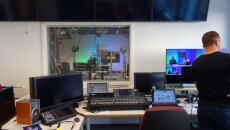
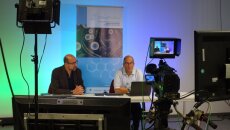
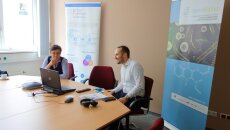
Image: Alena Gold & Luo YuThank you all for participating and sharing of your latest research on microbial and biomolecular interactions. The Microverse I Symposium had over 230 participants from 50 institutions of 17 different countries as well as a range of leading experts and many young scientists. Besides lively interactions through live presentations with follow-up questions, participants had round table discussions and the chance to join many poster presentations.
Fill up our Twitter feed with your experiences of the conference: #MicroConf2020External link
We look forward to seeing you again!
Paul Rainey | Max Planck Institute for Evolutionary Biology, Ploen
Leo Eberl | University of Zurich
Melanie Blokesch | Swiss Federal Institute of Technology Lausanne
Daniel Rozen | Leiden University
Christine Beemelmanns | Leibniz Institute for Natural Product Research and
Infection Biology - Hans Knöll Institute, Jena
Søren J. Sørensen | University of Copenhagen
James C. Stegen | Pacific Northwest National Laboratory, Richland
Alexander J. Probst | University of Duisburg-Essen
Will Overholt | Friedrich Schiller University Jena
Stephanie Jurburg | German Centre for Integrative Biodiversity Research Halle-Jena-Leipzig
Muriel Gugger | Institut Pasteur, Paris
Martin Polz | University of Vienna
Ute Hentschel Humeida | GEOMAR Helmholtz Centre for Ocean Research Kiel
Christian Jogler | Friedrich Schiller University Jena
Xiaoyu Tang | J. Craig Venter Institute, La Jolla
Matt Hutchings | University of East Anglia, Norwich
Caroline Müller | Bielefeld University
Helge B. Bode | Goethe University Frankfurt
Julie A. Z. Zedler | Friedrich Schiller University Jena
Pierre Stallforth | Leibniz Institute for Natural Product Research and Infection Biology - Hans Knöll Institute, Jena
Friedrich Götz | Eberhard Karls University Tübingen
Heike Brötz-Oesterhelt | Eberhard Karls University Tübingen
Thomas F. Schulz | Hannover Medical School
Hortense Slevogt | Jena University Hospital
Jürgen Popp | Friedrich Schiller University Jena and Leibniz Institute of Photonic
Technology, Jena
Thomas Böttcher | University of Konstanz
Angela Sessitsch | Austrian Institute of Technology, Tulln
Doreen Babin | Julius Kühn Institute, Federal Research Centre for Cultivated Plants, Braunschweig
Matthew Agler | Friedrich Schiller University Jena
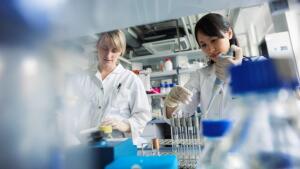
Excellent research on dynamic balances of microbial communities
Image: Anna SchrollThe Research Cluster investigates the complex interactions of microorganisms with other organisms and with their environment, which are of great significance for the functioning of ecosystems, our climate and the well-being of plants, animals and humans.
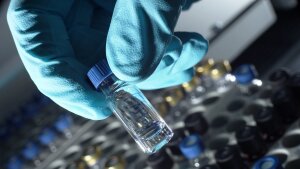
ChemBioSys
Image: Jan-Peter Kasper (University of Jena)The aim of the CRC ChemBioSys is to explore fundamental regulatory processes in complex biosystems that affect our daily lives. The focus is on chemical mediators that play key roles in regulating the composition of communities and interactions of individual organisms of one or multiple species.

AquaDiva field site
Image: Robert LehmannThe CRC AquaDiva focuses on the important roles of water (Aqua) and biodiversity (Diva) for shaping the structure, properties and functions of the subsurface, the part of the Earth`s Critical Zone that begins below the highest density of plant roots and extends down into the first aquifers.
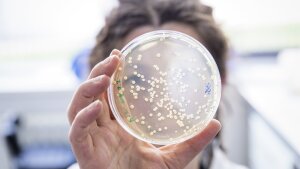
InfectControl
Image: Anna SchrollInfectControl is a research association in which science and industry have joined forces to fight infectious diseases. Its aim is to prevent these diseases in the long term, to detect them faster and to fight them consistently. InfectControl supports educational campaigns and development of new diagnostic markers and tools.